











Description
MONARCH BUTTERFLY HABITAT: Common milkweed (Asclepias syriaca) is a host plant for monarch butterfly larvae. Planting this native wildflower helps support monarch populations by providing a food source for caterpillars. Suitable for USDA Zones 3–9.
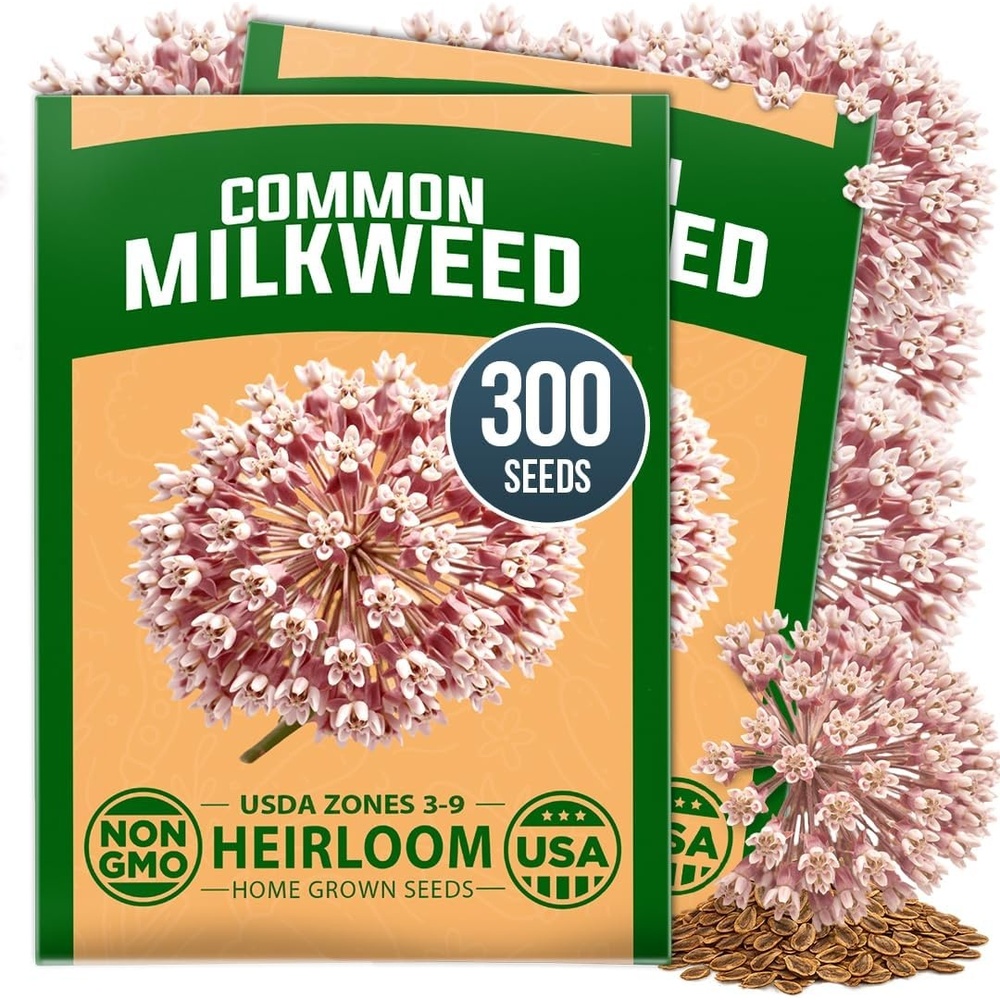
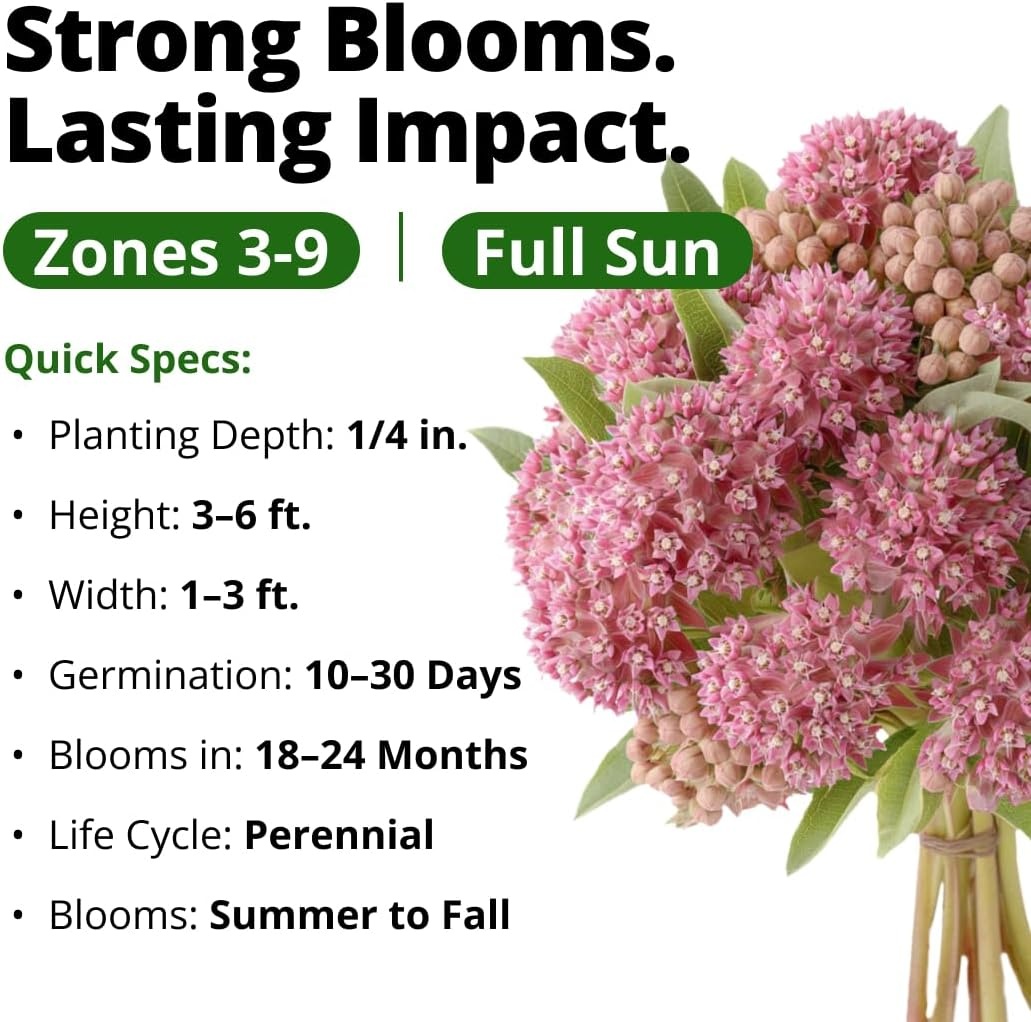
FRAGRANT BLOOMS: This variety grows 3–5 ft. tall and produces scented pink to mauve flower clusters, 2–4 inches wide. Grows best in full sun to partial shade. The flowers attract various pollinators, including native bees, honeybees, hummingbirds, and hoverflies.
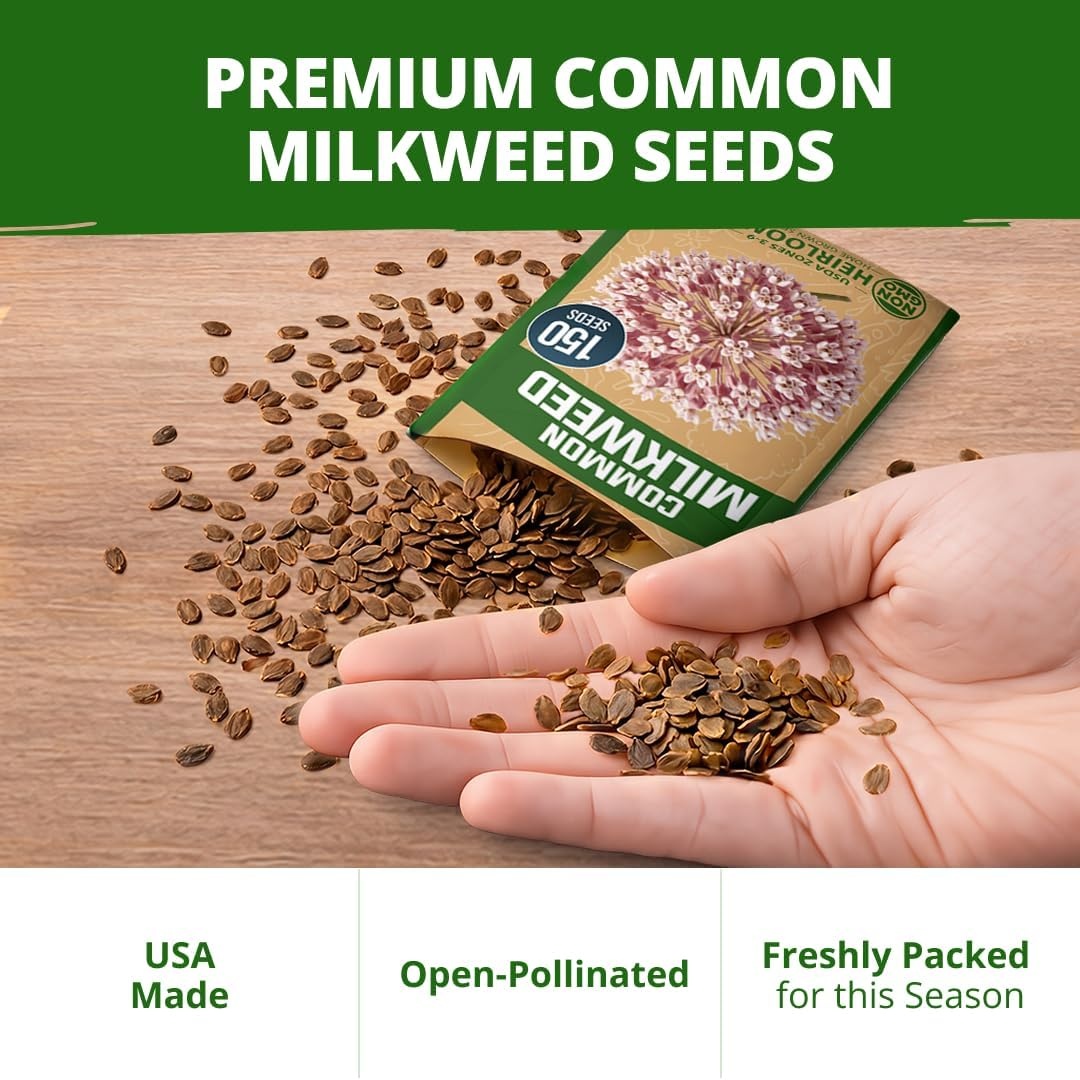
PERENNIAL GROWTH HABIT: As a hardy perennial in USDA Zones 3–9, common milkweed typically returns each year through rhizomes and natural reseeding. Seeds are open-pollinated.
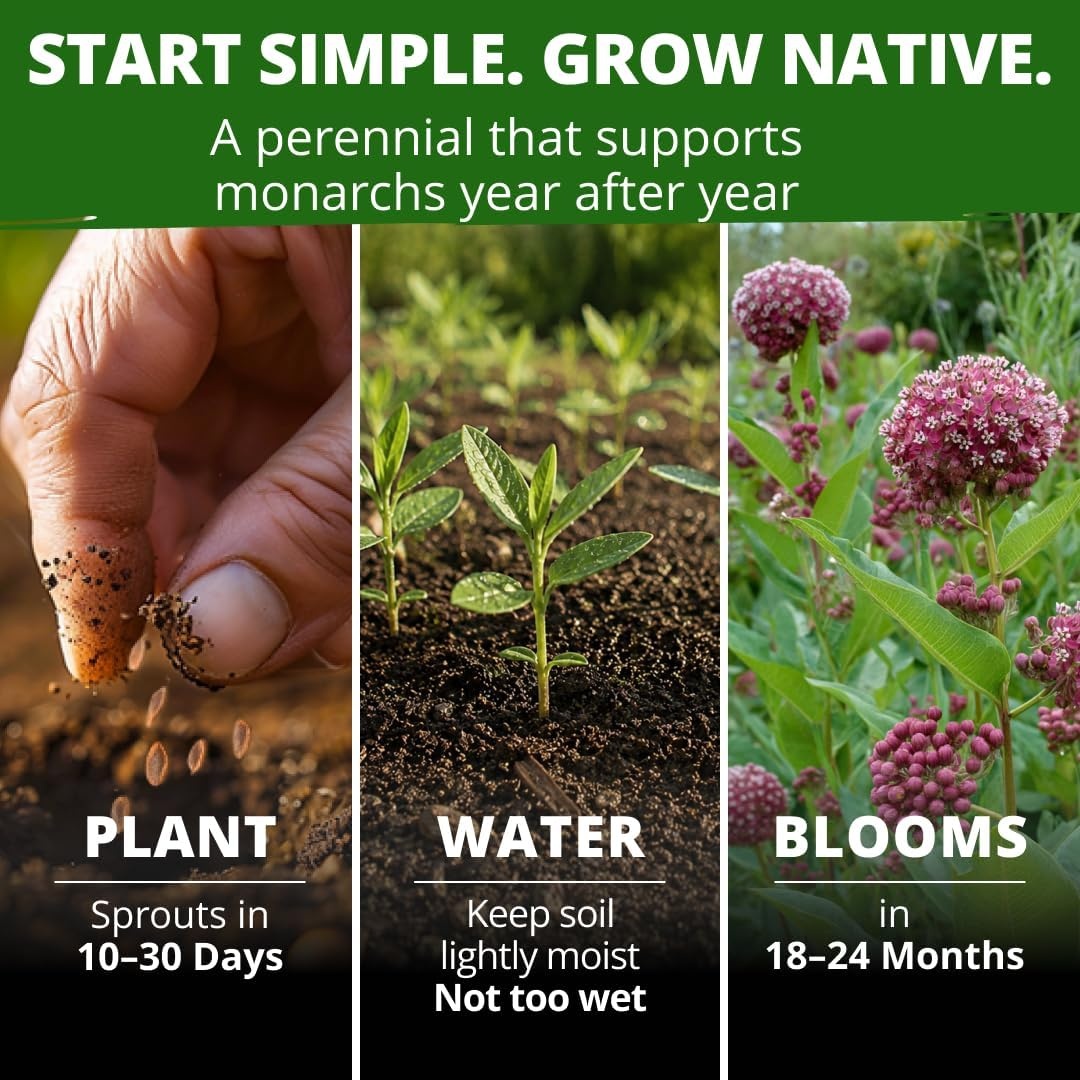
PLANTING AND GERMINATION: Seeds can be direct sown in fall to allow for natural cold-stratification, or cold-stratified in the refrigerator for 30 days prior to spring planting. Plant seeds 1/8–1/4 inch deep in well-drained soil. Germination generally occurs at 60–70°F.
ADAPTABLE TO VARIOUS SOILS: Once established, common milkweed is drought-tolerant and performs well in average to poor, well-drained soil. Requires little supplemental watering or fertilization once established. Seed pods may remain through the fall to provide interest in the landscape.



Reviews
There are no reviews yet.